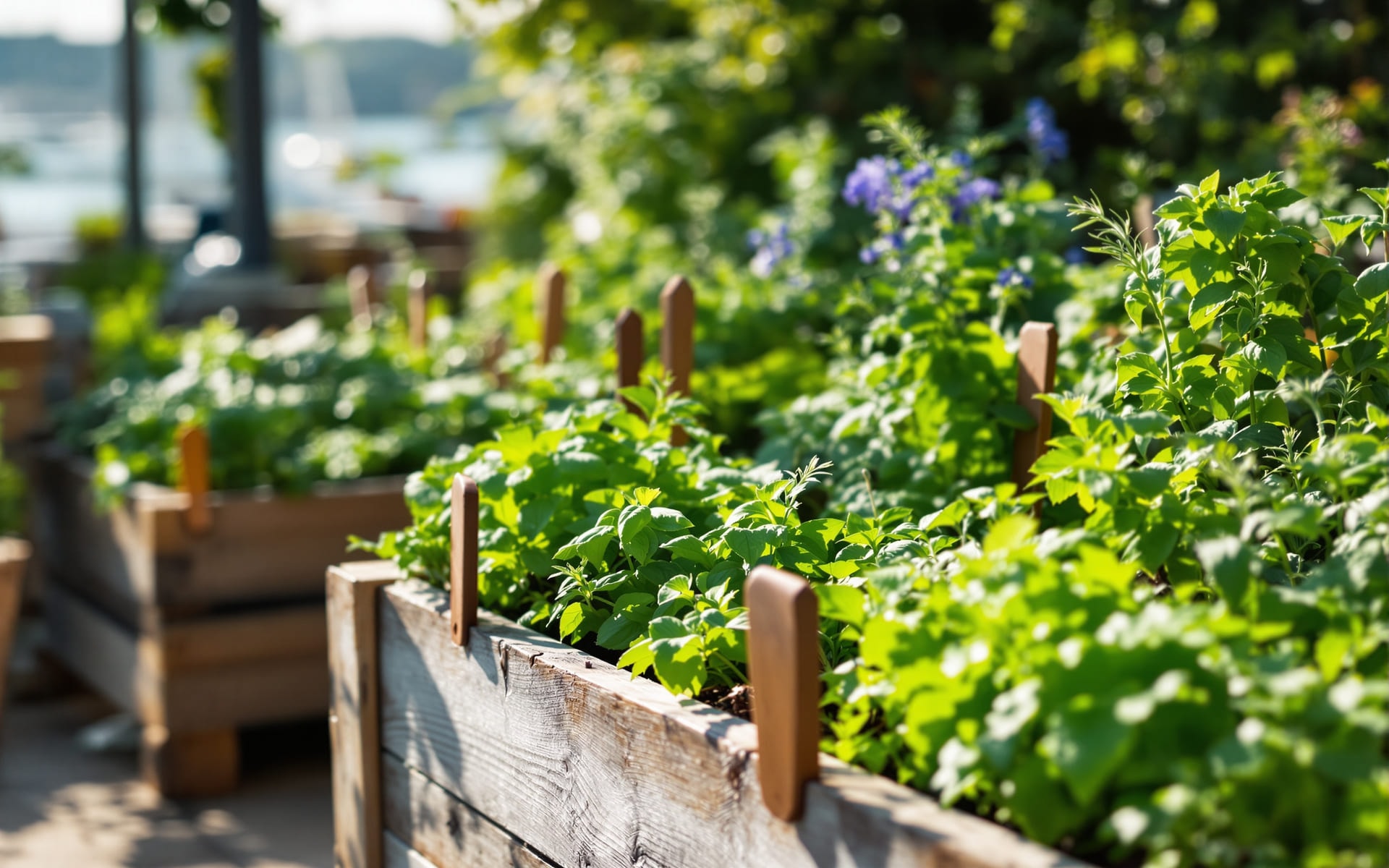
The Herb Garden
The Harbor Grill grew its own herbs, on site, in beds guests could walk past. The restaurant's own invitation was direct: visit our herb garden, where you will find a unique display of fresh herbs that we use in the preparation of your entrée.
The Harbor Grill closed on 30 September 2022. This page is an archive of a feature the restaurant maintained for more than twenty years.
What grew there
Five herbs did the work, and the restaurant named all of them: basil, tarragon, cilantro, sage and rosemary. They were, in the kitchen's words, used daily in the fresh stocks and sauces. That is a short list, and its shortness is the interesting part — these are not decorative herbs, they are five workhorses chosen to cover the whole geographic range the menu insisted on.
- Basil — the pesto sauce on the grilled salmon, and the basil cream on the lobster ravioli. Also, almost certainly, the cucumber basil martini at the bar.
- Tarragon — the tarragon mustard mayonnaise served with smoked halibut, and the lemon tarragon butter on Pacific swordfish. An unfashionable herb by the 2010s, and used here properly.
- Cilantro — the cilantro and green chile salsa on grilled shrimp, the garnish on the Thai steamed oysters, and the taco plates.
- Sage — stocks, and the heavier sauces.
- Rosemary — stocks, and anything that went near the wood fire.
Trace those five names through the dinner menu and most of the sauce work on the card is accounted for. The garden was not a garnish programme; it was an ingredient supply.
Five herbs, three jobs
The list makes more sense when divided by job. Basil and cilantro were fresh finishing herbs, at their best when their brightness remained obvious. Tarragon sat between fresh and cooked uses, strong enough for mustard mayonnaise and delicate enough for butter sauce. Sage and rosemary could stand up to stockpots and the smoke of the grill. Five plants therefore covered cold sauces, warm finishes and the deeper background of stocks.
They also gave the cooks a simple way to change direction without changing the fish. Cilantro pushed a plate toward green chile, salsa or Thai aromatics; basil moved it toward pesto and cream; tarragon made a French-leaning butter or mayonnaise; rosemary and sage belonged with slower, savoury foundations. The menu's geographic range depended on those small turns.
Why a restaurant grows its own
Soft herbs are the ingredient that suffers most between a supplier and a service. Basil and cilantro bruise, wilt and lose their volatile oils within a day or two of cutting; tarragon in particular goes flat almost immediately. A kitchen that cuts them fifteen paces from the pass gets a materially different ingredient from one that takes a delivery twice a week, and on a menu built around fresh stocks and finishing sauces that difference is the whole flavour.
The Southern California coast is close to ideal for the five the Grill chose. Rosemary and sage are Mediterranean shrubs that thrive on a dry, mild, maritime climate and will crop for years from one planting. Basil and cilantro are annuals that want warmth and steady water; cilantro bolts fast in heat, which is why restaurants growing it sow repeatedly through the season rather than once. Tarragon is a perennial that wants good drainage and dislikes wet feet. General university extension guidance on growing culinary herbs covers all five and confirms what the harbour setting suggests: this was a low-maintenance, high-yield planting rather than a stunt.
A very long-running feature
The herb garden was one of the oldest things about the restaurant. A page devoted to it appears in the archived URL structure as far back as 2000, and it kept a page of its own through every redesign the site went through — the flat-HTML era, the directory era, and into the final years. Few restaurants give a garden bed a permanent navigation slot for two decades.
The archived page carried a five-image slideshow of the beds, which was a generous amount of screen real estate for a herb bed in the era of dial-up-adjacent hotel wifi. The restaurant clearly regarded it as a genuine attraction and not a marketing line.
The garden and the grill
The garden made most sense read alongside the mesquite grill. Wood fire gives fish smoke, char and a certain hardness; the finishing sauces gave it back brightness and direction. Cutting the aromatics fresh is what let a single grilled fillet convincingly become Mediterranean, Southwestern or Pacific Rim depending on which line of the menu it was answering.
It also fits the restaurant's habit of keeping the workings visible. Guests could watch the chef cook over the wood fire from the room, and they could walk past the beds the sauces came out of. For a harbour restaurant serving several hundred covers a day, that is a quietly confident way to run a kitchen.