Dana Point Harbor
The Harbor Grill spent as many words on the harbour as on its own kitchen, and it was right to. The restaurant was a harbour tenant first — the view of masts was half the offer, and the water was the reason anyone was there at all.
The Harbor Grill closed on 30 September 2022. This page describes the harbour as the restaurant described it and as it stood during the restaurant's life. Dana Point Harbor has since been substantially rebuilt.
Getting there, by land or by sea
Dana Point Harbor sits on the Southern California coast midway between Los Angeles and San Diego, just south of Laguna Beach. The restaurant's own directions were characteristically relaxed about it: whether you came down the Pacific Coast Highway, off the freeway at the Beach Cities exit, or in on a boat, everything led to the same water.
That last option was not a flourish. A working marina means a proportion of any harbour restaurant's covers arrive by sea, tie up, and walk in still wearing deck shoes. It is one of the things that made the Grill's menu shape sensible — the burgers and the fish and chips next to the bouillabaisse.
The harbour itself
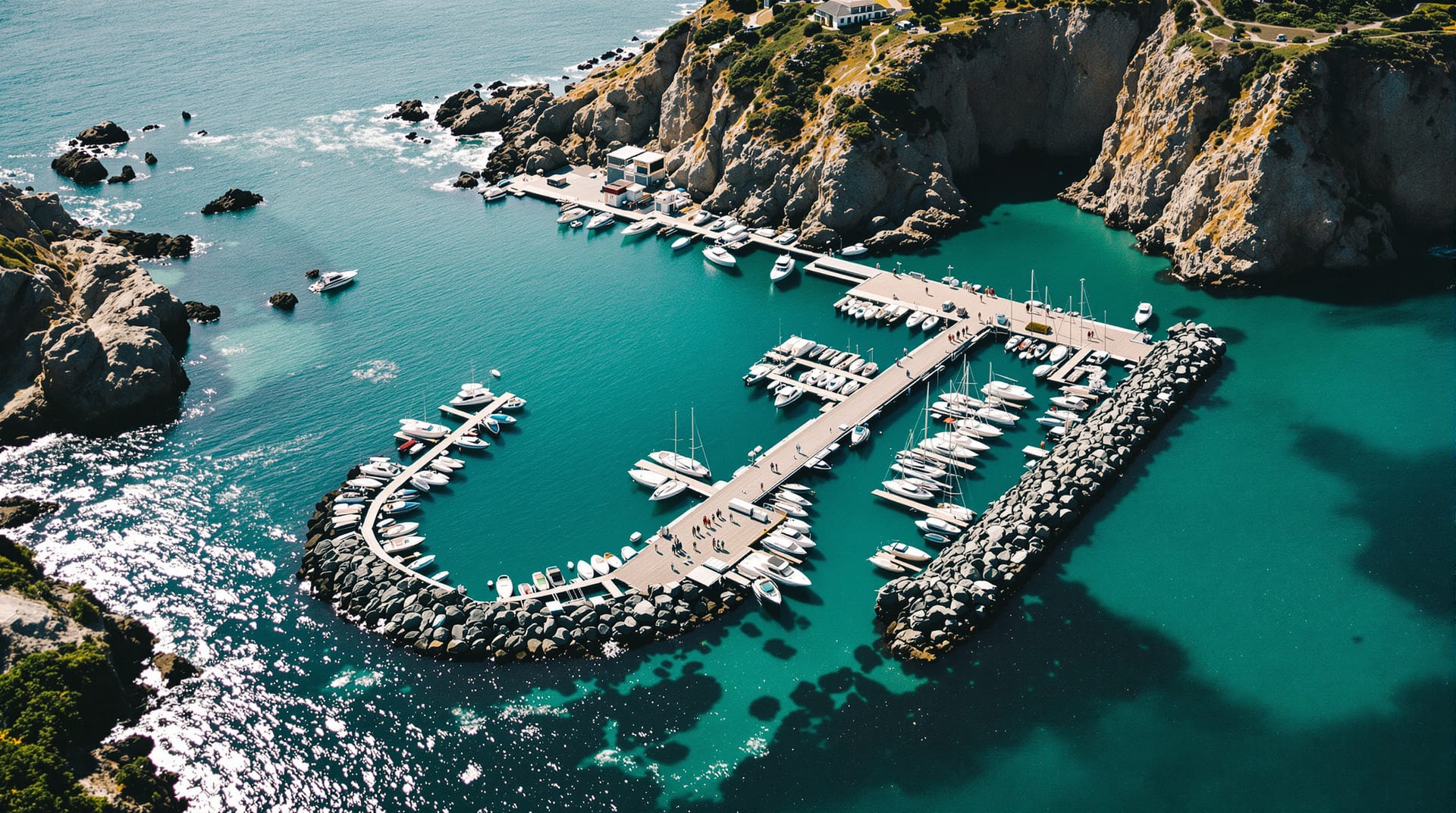
Dana Point Harbor is a portside community in a natural setting, cove-bound on one side by dramatic cliffs and on the other by the open Pacific. Two marinas sit inside a jetty a mile and a half long, holding somewhere around 2,500 boat slips between them. The restaurant called it one of the most romantic spots in California, which is the kind of line every coastal town uses, but the geography does most of the work here — a sheltered basin under bluffs, with the ocean five minutes from the launch ramp.
The facilities read like a complete small maritime economy: guest slips, launch ramps, a fuel dock, a shipyard, boat rentals, yacht sales and instruction, fishing, a year-round bait receiver, harbour cruises, windsurfing, jet skiing, certified dive charters, two yacht clubs, a sailing association, picnic areas and a sheltered beach for young swimmers. The harbour had a single hotel. Everything else was water, boats and the people servicing them.
Boating services and yacht clubs
The two marinas carried around 2,500 slips, with guest berths available for visiting cruisers and trailer boaters. From the launch facility it was about five minutes out to open ocean. The harbour supported a year-round bait receiver, a fuel dock, a shipyard and marine hardware stores. The shipyard ran a thirty-ton crane and a fifty-ton travel lift, which allowed boats up to about seventy feet to be pulled into dry dock, with both do-it-yourself areas and full service available. Inflatable boat and outboard engine sales, service and repair operated from the harbour too.
Four boat brokers worked out of the harbour, along with two yacht clubs and a sailing association. Small powerboats, sailboats and jet skis could be hired by the day, and charters on larger boats were available.
Tall ships, whales and ocean education
The harbour was home port to two tall ships — a full-rigged brig and a topsail schooner — and to an ocean-education institute running programmes for schools and the public. The brig was a working replica of the vessel Richard Henry Dana Jr. sailed on in the 1830s, which closed a rather neat loop: the point is named for Dana, whose Two Years Before the Mast described the hide trade conducted from exactly these bluffs, with hides thrown down from the cliff top to boats waiting below.
A sportfishing fleet ran half-day, full-day and twilight deep-sea trips out of the harbour. And from December through March the grey whale migration passes offshore; the town built an annual whale festival around it, and several harbour businesses ran whale-watching trips through the season. Anyone going out to look should read NOAA's marine life viewing guidelines first — approach distances for large whales are not advisory.
The shops
Around twenty-five shops occupied three small retail clusters on the wharf. The restaurant's own description of them is a period piece worth keeping intact: custom-designed jewellery, art collectibles, cards, hand-formed chocolates, gifts, toiletries, fragrant oils, sunglasses, leisure clothing, a beauty salon, T-shirts, international coffees and teas, ice cream, and — as the page put it — restaurants to please every palate. From dressy and classic through to bathing suits and beachwear, all of it what the copywriter cheerfully called "ship to chic".
What happened to it
Dana Point Harbor entered a comprehensive redevelopment in the early 2020s. The commercial buildings along the marina — the ones holding the shops and the restaurants described above — were within the scope of the rebuild. The Harbor Grill's operators were offered a place in the new harbour and chose instead to close. The version of the harbour on this page, the one with the twenty-five shops and the ship-to-chic clothes and the low restaurant building at the water's edge, no longer exists in that form.
Harbours change; that is what harbours do. The maritime heritage of the American coast is largely a record of working waterfronts being rebuilt for the next use. What is worth preserving is the description of a particular one at a particular time, which is what this page is.
Elsewhere in this archive
The restaurant that stood here is described under about, its kitchen under the mesquite grill, and its herb garden — which grew a few steps from this water — has its own page.